In the wake of a pandemic that tore through the social and economic fabric of nations, India, known for its mosaic of cultures, languages, and faiths, witnessed not only its people’s vulnerability but also its civil society’s resilience. Among the vanguards of this resilience stood the All-India Women’s Conference (AIWC) a pioneering women-led organization that, for nearly a century, has been championing the cause of peace, communal harmony, and national integration. Amid a world threatened by fear and fragmentation, AIWC emerged as a gentle but determined force, echoing Mahatma Gandhi’s belief that “peace is not the absence of conflict, but the ability to cope with it.”
Founded in 1927, the AIWC’s journey of promoting harmony began long before the COVID-19 crisis. But during the pandemic, its mission took on renewed urgency. While many institutions retreated into isolation, AIWC expanded its outreach—feeding the hungry, educating the isolated, healing the divided. The work was not simply social—it was civilizational.
India’s Directive Principles of State Policy (Article 51A) enshrine the duty of every citizen to “promote harmony and the spirit of common brotherhood.” These values, reflected in the AIWC Constitution under Article 4, are not ornamental ideals but functional necessities in a country as plural as India. As philosopher Dr. Radhakrishnan once said, “Tolerance is the homage which the finite mind pays to the inexhaustibility of the Infinite.” AIWC has paid this homage actively through service, dialogue, and solidarity. The organization’s belief in Vasudhaiva Kutumbakam—”The world is one family”—is not merely rhetorical. It is a lived principle, reflected in how AIWC responded to the pandemic not just as a public health crisis, but as a test of the Indian soul. The organizations’ alignment with Prime Minister Modi’s “One Earth, One Family, One Future” slogan at the United Nations Headquarters in New York, during India’s G20 presidency, and echoes of Jawaharlal Nehru’s Panchsheel (Five Principles of Peaceful Coexistence) show that the AIWC acts where philosophy meets grassroots impact.
Service, Solidarity, and Social Cohesion in Action
As the nation grappled with the socio-economic consequences of lockdowns and health restrictions, AIWC branches across India became anchors of community support. With an agile, decentralized model, AIWC’s members coordinated with local authorities to distribute cooked meals, groceries, vegetables, and hygiene products to the most vulnerable populations, including daily-wage earners, single mothers, domestic workers, elderly citizens, and religious minorities. This assistance was extended without bias—an intentional stance to promote solidarity across caste, religion, and class divides. AIWC also worked closely with healthcare and police personnel, embodying the spirit of collective civic duty in difficult times.
Branches like AIWC Raiganj in West Bengal held extensive outreach with Anganwadi workers and rural women’s groups. AIWC Sanju Women’s Welfare Association, Chennai, conducted interfaith prayer sessions during National Integration Day. In Hyderabad, the branch partnered with the Gitanjali group of schools to launch a youth wing and conducted competitions that saw participation from over 300 students. AIWC Kakinada initiated an AIWC-Youth Wing at Nannaya University and held tree plantation drives alongside unity awareness campaigns. The Priyadarshini Mahila Samajam and Neyyattinkara branches in Kerala organized four awareness programmes with Self-Help Groups, distributed flag stickers, and fundraised despite limited resources.
AIWC Rajkot (Gujrat) hosted a major event on 27th February 2020 at Saurashtra University with broad academic participation, while AIWC Lucknow (U.P.) celebrated India’s cultural tapestry on 2nd March 2020 at Avadh Girls’ P.G. College. In Haridwar, Jagiriti Women’s Conference hosted a webinar on “Communal Harmony and National Unity,” attended by AIWC leadership. The Bikaner (Rajasthan) branch conducted a seminar highlighting the vital role of women in promoting national unity, stating, “No religion teaches violence—communal harmony is the foundation of our nation.”
Beyond material aid, the organization tackled another equally urgent task: preserving societal harmony in an atmosphere of fear, misinformation, and alienation. The economic uncertainties and psychological stress of the pandemic had the potential to exacerbate communal fault lines. Recognizing this, AIWC intensified its focus on promoting trust, peace, and interfaith unity. A landmark step in this direction was its collaboration with the National Foundation for Communal Harmony (NFCH), an autonomous body under the Ministry of Home Affairs, which had provided aid to over 13,500 children impacted by communal violence. Together, AIWC and NFCH launched a national campaign to reinforce India’s secular and pluralistic values during the pandemic years.
From 2020 to 2021, AIWC and NFCH organized ten region-specific webinars that brought together educators, administrators, social workers, and citizens to discuss themes such as constitutional duties, youth participation, the role of women in peacebuilding, and the psychological toll of crises.
Each webinar was adapted to the cultural and socio-political context of the zone. The Central Zone focused on “Responsibilities of Citizens,” while the North East discussed mental health and peace during crises. South Zone (A) reflected on unconditional aid given to migrants, and West Zone emphasized civic duties post-pandemic.
Importantly, AIWC’s initiatives highlighted the unique role of women in nurturing peace and harmony, both within homes and in public life. Through sessions such as “Women in Satyagraha: A Continuing Legacy” with scholars like Prof. Sachidanand Mohanty and Dr. Varsha Das, AIWC reclaimed the role of women in non-violent resistance. Similarly, Prof. S.R. Bhatt, speaking on “Ahimsa: A Vehicle for Peace,” reminded us: “The power of Ahimsa is greater than the power of intellect.” Sister B.K. Shivani, in the “Anekata Mein Ekta” webinar, stressed forgiveness, empathy, and inner peace as tools for outer harmony. These were not abstract philosophical explorations; they were deeply practical lessons drawn from lived experiences of caregiving, negotiation, and emotional labour—domains where women already play central, though often invisible, roles.
From Relief to Reconstruction: A Civilizational Ethic
As India emerged into a post-pandemic reality, AIWC didn’t retreat. It evolved. Between 2022 and 2024, over 40 AIWC programs reached more than 2,650 individuals across the country, focusing not just on charity but on rebuilding bonds of citizenship, mutual respect, and constitutional fraternity. These efforts—ranging from street plays and school competitions to youth leadership and interfaith dialogue—were premised on the belief that national integration cannot be imposed from above. Rather, it must be cultivated through relationships of trust and shared values at the community level.
AIWC Jabalpur (Madhya Pradesh) hosted a national seminar on “Women’s Role in Unity and Integrity,” while the Chennai branch’s seminar on “Vasudhaiva Kutumbakam” underscored cultural transmission. The Tripura branch emphasized rural women’s role in promoting culture and agriculture. AIWC Dausa (Rajasthan) hosted drawing competitions to foster fraternity, while Hyderabad’s youth wing celebrated Flag Week with 318 students participating. In Raiganj, 51 members joined an NFCH-supported webinar and youth-led discussions on communal harmony.
AIWC’s message echoed the civilizational foundations of Indian thought, where peace is not only a political goal but a spiritual and social imperative. As Mahatma Gandhi once said, “The best way to find yourself is to lose yourself in the service of others”a philosophy AIWC embodies through its ceaseless work. Equally resonant is the perspective of UN Secretary-General António Guterres, who observed that “Peace is more than the absence of war. Peace is the presence of dialogue, inclusion, and dignity.” AIWC’s programming during this period thus moved from mere relief toward reconstruction—not just of physical well-being, but of social trust, civic empathy, and inter-community harmony.
These grassroots responses are not only practical but also resonate with deeper academic perspectives on how civil society functions during times of rupture. The AIWC’s approach reflects broader understanding of civic engagement, feminist praxis, and peacebuilding in crises.
Recent academic discourse has also moved beyond viewing civil society as a mere service provider, instead framing it as a critical site of democratic imagination and resistance. As Rajeev Bhargava argues in Economic and Political Weekly, civil society in India must be understood as a space where creative dissent and transformative citizenship emerge in response to both market and state failures. This perspective challenges the binary of state versus society, suggesting instead that civil society mediates between institutional power and lived experience. Similarly, Renu Addlakha’s work in the Indian Journal of Gender Studies emphasizes that civil society is not just a buffer in times of crisis—it is a guardian of women’s human rights, especially in contexts where formal institutions falter. Internationally, Yaser Alashqar’s review in the Palgrave Encyclopedia of Peace and Conflict Studies highlights that the role of civil society in peacebuilding is ambivalent but indispensable, capable of both healing and harming, depending on its alignment with grassroots realities and power structures.
A Template for Tomorrow
The All-India Women’s Conference has shown that peace is not passive. It is practiced in kitchens, community halls, and on college stages. Its commitment to communal harmony, often rooted in the everyday struggles and solidarities of women, is a reminder that national unity is not forged through slogans, but through service. AIWC’s model, infused with values of empathy, trust, and constitutional ethics, aligns not only with Indian civilizational thought but also with contemporary scholarly paradigms of positive peace and feminist care ethics viewing peace not simply as the absence of violence, but as the presence of justice, compassion, and relational dignity.
Its work affirms that civil society is not the periphery of democracy but its lifeblood, and that women’s leadership is not symbolic it is strategic. With every meal served, every webinar hosted, and every young girl empowered to speak up, AIWC is not just fostering harmony; it is reweaving the nation’s moral fabric.
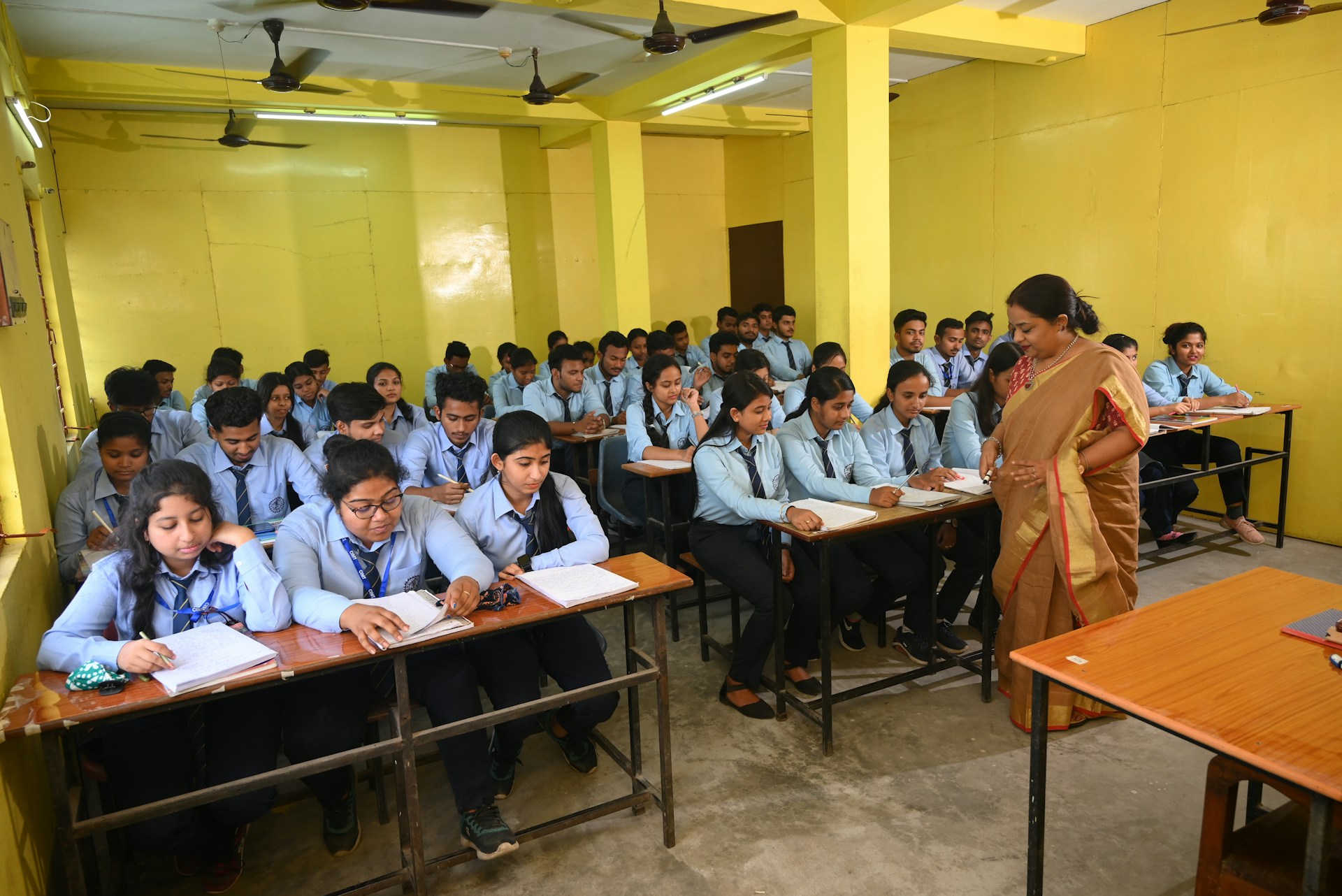
As India celebrates its constitutional promises and prepares to address future perils—such as climate change, the digital divide, and gender gaps—organizations like AIWC light the path forward, offering a grounded, human-centered model of peacebuilding.
“When the power of love overcomes the love of power, the world will know peace.” — Jimi Hendrix
And when women lead this revolution, we don’t just get peace—we get progress with purpose.



One Response
As 2025 draws to a close we see violence increasing around the world. Formerly relatively peaceful places like the United States see an upswing, particularly in political violence, to the dismay of our Associate there. Members of our two Affiliates in Nigeria must constantly be on the lookout for attacks by terrorist militias. Israel is wracked by the effects of military activities causing our Affiliate WIZO much distress. In Cameroon, Bali Women’s Union of Farming Groups, one of our three Associates, has been driven from its home region by militias and is valiantly hanging on in internal exile. The situation of Solidarité des femmes pour le développement, environnement et droits de l’enfant au Congo (SOFEDEC), our Affiliate in the Democratic Republic of Congo is also a life in hiding from military violence and the peace mission of Board Member Ntakebuka Wene Mwafizi Wilhelmine is never-ending. Countries with no affiliation or association with IAW, like Sudan or Myanmar/Burma are also on our minds.
The All India Women’s Conference, in a country suffering stresses both on its borders and between ethnic communities within its borders, has embarked on a multi-year campaign striving for Communal Harmony to work against the escalation of conflicts. This fits within the framework of “Women, Security and Peace’, promoted by the United Nations