The UN headquarters seen from the United Nations grounds, a perspective reserved for official visitors. Taken by Sanja Jeraj during CSW68.
The UN headquarters seen from the United Nations grounds, a perspective reserved for official visitors.
Taken by Sanja Jeraj during CSW68.

On this page, we publish first hand reports of events at UN headquarters (UNHQ) from our permanent representatives, delegates, and dedicated members.

Table of Contents

UN 80 Initiative – Civil Society Briefing, December 15, 2025

Prepared by Jill Follows, IAW Main Representative to the UN/NYC in December 2025

The UN Under Secretary General (USG) for Policy, Guy Ryder, outlined the work of the UN 80 Initiative during a Civil Society Briefing (virtual) on December 15, 2025. See  https://www.un.org/un80-initiative/en   

The UN 80 Initiative has been described as a bold, system-wide transformation that will make the UN system work more efficiently and deliver greater results for people and the planet.

The UN 80 Initiative addresses the question: How will the UN make its system more coherent, efficient, and effective right now?  The answer is found in the Initiative’s operational framework that creates three workstreams:

  • Report on the UN Mandate Implementation Review
  • Proposal for changes to the UN Secretariat Program Budget for 2026; and
  • Streamlining the structure and programs of the UN, including a reset on the role of regional mechanisms

The UN 80 Initiative’s Action Plan https://news.un.org/en/story/2025/11/1166429 sets up 31 Work Packages, broken into clusters, and centered on a/an

  • “reset” for peace and security models for peace operations
  • advancement of the New Humanitarian Compact that aims to simplify emergency responses
  • reconfiguration of the UN Country Teams to accentuate collective expertise and cost-effectiveness and
  • review of a possible merger between UNFPA and UN Women that will not reduce any systems in place

UN USG Ryder stressed that the UN 80 Initiative is committed to working with civil society, preparing its proposed budget without unfair impact on marginalized people, centering accountability measures, and moving the UN forward from aspirational objectives to effective outcomes.

Resource List - UNGA80 Edition

Prepared by Jill Follows, IAW Alternate Representative to the UN/NYC in October 2025

Excerpt from the poem of Maryam Bukar Hassan, the first UN Global Advocate for Peace

Let us not forget those who have carried peace quietly through the fire

The women whose hands mend what war has torn

Who rebuild homes from memories

Raise children between checkpoints

Hold their families like nations

Because peace has always known the name of a woman, spoken through the way she chooses courage over collapse, again and again

https://www.youtube.com/watch?v=bXqFYa6OR74

Nobel Peace Prize Laureate Maria Ressa (2021) pronounces that impunity is the biggest battle we fight today and that information integrity is the mother of all battlesIn order to avoid an information Armageddon, we must fight for information integrity because if we don’t have facts then we don’t have truth.  Without truth we don’t have trust in people or governments.  She also called for drawing AI red lines, lines that end big tech’s impunity for disinformation. Maria Ressa – Nobel Women’s Initiative

Adoption of the Resolution on Revitalization of the Commission on the Status of Women The CSW will continue to convene its five-yearly review sessions in rotating locations and help bridge the gap between global commitments and local experiences. The revitalized CSW will hold an annual High-Level meeting, beginning with CSW70, on the topic of violence against women.  https://www.unwomen.org/en/news-stories/speech/2025/09/speech-gender-equality-remains-a-unifying-force-for-the-world-2025-must-be-our-turning-point

Executive Director of UNFPA, Ms. Diene Keita, reminds us that “sexual and reproductive health and reproductive rights are a precondition for women’s empowerment and essential to dignity and development.”

https://www.unfpa.org/press/opening-remarks-ms-diene-keita-unfpa-executive-director-unga80-high-level-meeting-beijing30

Violence against Women and Girls in Sports The UN Special Rapporteur on Violence against Women and Girls highlighted its report (A/79/325) on the causes and consequences of violence against women and girls in sports.  https://www.ohchr.org/en/documents/thematic-reports/a79325-report-special-rapporteur-violence-against-women-and-girls-its

Spotlight Initiative is a global, multiparter trust fund of the UNSG that provides advice to the UN Deputy SG and harnesses civil society expertise to implement programs committed to ending violence against women ad girls. Who we are | Spotlight Initiative  Actress and UN Global Advocate for Spotlight, Cecilia Suarez, pointed out the large disparity between global spending on gender equality vs defense/military spending.  She asked everyone to consider why “we consider having the means of destruction more important than creating development and opportunities for women and girls?”  Invest in women, not war: UN Global Advocate for Spotlight Initiative Cecilia Suárez calls for action on gender equality | Spotlight Initiative

CREATE  Framework  The Chair of the UN Working Group on Discrimination Against Women and Girls, Claudia Flores, referenced the Working Group’s Guidance Document for achieving substantive gender equality.  (CREATE) https://www.ohchr.org/en/documents/tools-and-resources/ahrcwg11421-substantive-gender-equality-guidance-document-working   A/HRC/WG.11/42/1 (March 14, 2025)

UHC Day 2025 – CAMPAIGN LAUNCH

Prepared by Dr. Uzma Gul, IAW Board member, in October 2025

Advancing Financial Protection & Gender-Responsive Health Systems

The 2025 UHC Day campaign, led by UHC2030 and partners, emphasizes financial protection and equitable access to health care as central to universal health coverage (UHC). Over half the global population lacks essential health services, and one in four faces financial hardship, often sacrificing basic needs. The campaign highlights human stories behind these statistics to advocate for policy action and systemic change.

Key Themes from the Panel: 
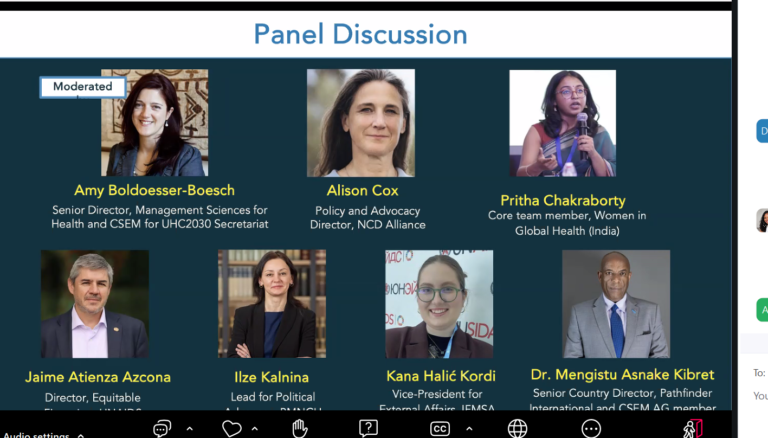
    • Alison Cox (NCD Alliance) noted that NCDs, including diabetes, cancer, and mental health conditions, drive high out-of-pocket costs—twice that of communicable diseases.
    • Costs extend beyond treatment: transportation, lost income, childcare, and emotional toll.
    • Case study: Michael Uchenor (Nigeria) shared his stroke recovery journey, demonstrating resilience and advocacy while highlighting catastrophic financial burdens.
    • Report: Paying the Price explores household economic impacts of NCDs (link).
    • Pritha Chakraborty (Women in Global Health, India) highlighted systemic inequities faced by women as patients and healthcare workers.
    • ASHA community health workers often bear personal costs, receive delayed payments, and risk illness due to lack of financial protection.
    • Key recommendation: embed gender-responsive budgeting in UHC to ensure equitable allocation of resources for women’s health needs and fair pay for community health workers.
    • Resources: UHC2030 narrative on gender-responsive health systems (link).
    • Kana Halic-Gordic (IFMSA) emphasized that 1 in 3 young people globally lack access to essential healthcare, with out-of-pocket costs as a primary barrier.
    • Financial dependency, schooling, and low-income backgrounds amplify inequities, delaying care and fostering distrust in health systems.
    • Youth advocacy is critical: empowering young people, creating spaces for shared experiences, and engaging them meaningfully in policy processes strengthens accountability and innovation.
    • Dr. Mingitsu Asanake-Kibret (Pathfinder International) highlighted Ethiopia’s community-based health insurance as a model for expanding coverage and reducing catastrophic spending.
    • Civil society and NGOs play a vital role in holding governments accountable for UHC commitments, promoting financial protection, and advocating for domestic resource investment.
    • Advocacy priorities: expanding coverage for the most vulnerable, increasing domestic investment, and ensuring transparency and accountability in health financing.
    • Ilze Konya (PMNCH) stressed multisectoral leadership and investment in health, linking maternal, newborn, child, and adolescent health to economic productivity and stability.
    • Magda Robalo (UHC2030) emphasized that UHC protects dignity, strengthens economies, and reduces inequities. Every dollar invested in financial protection generates significant social and economic returns.
Actionable Takeaways:
  • Spread the UHC Day 2025 campaign message and share lived experiences via the Health Costs Hurt initiative.
  • Engage decision-makers through statements, letters, and media advocacy.
Screenshot from Panel Discussion

Engagements as an IAW member in UNGA80

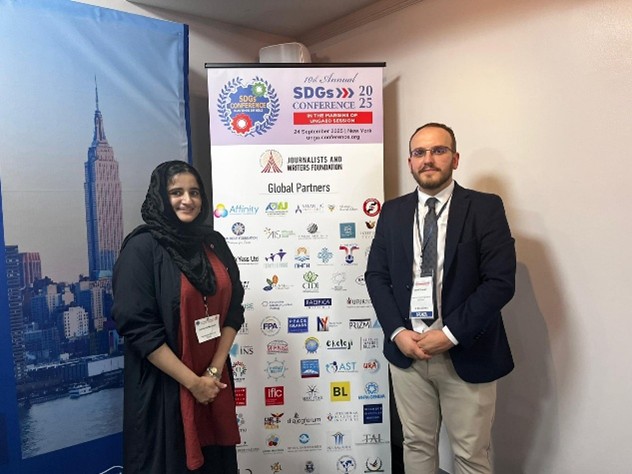
Prepared by Qurratulain Munawwar, IAW member, in October 2025

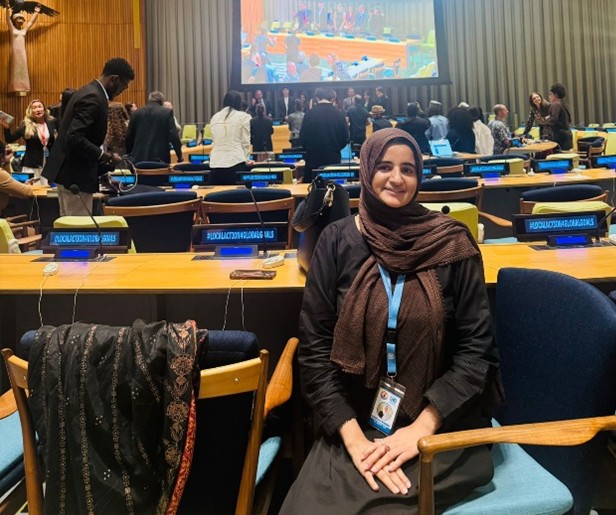
Held on 18 September 2025 at the UN Headquarters, Trusteeship Council Chamber, New York, this conference focused on engaging citizens and youth, promoting digital innovation, and localizing the Sustainable Development Goals (SDGs) in times of increasing climate crisis and growing uncertainties.

This meeting brought together various stakeholders to explore creative solutions and governance innovations, connecting and empowering participants in a global ecosystem, with a particular focus on the systemic role of Digital Public Infrastructure (DPI). Local multi-stakeholder action for the global common good was highlighted as essential for a sustainable future and a good life for all.

https://webtv.un.org/en/asset/k1u/k1us07izpx

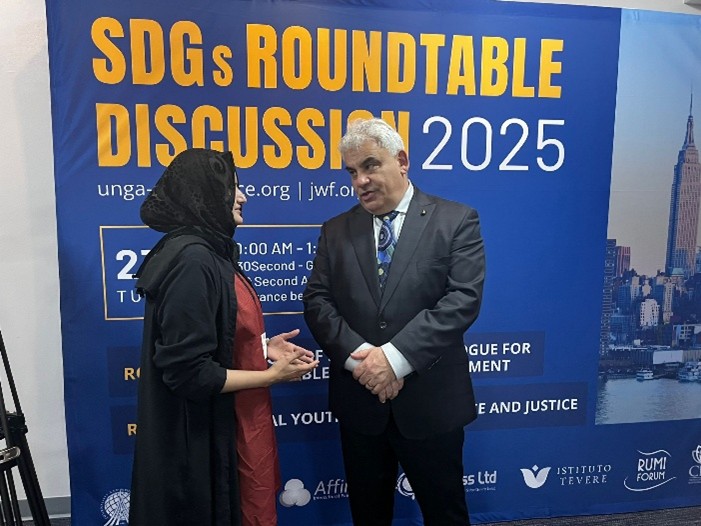
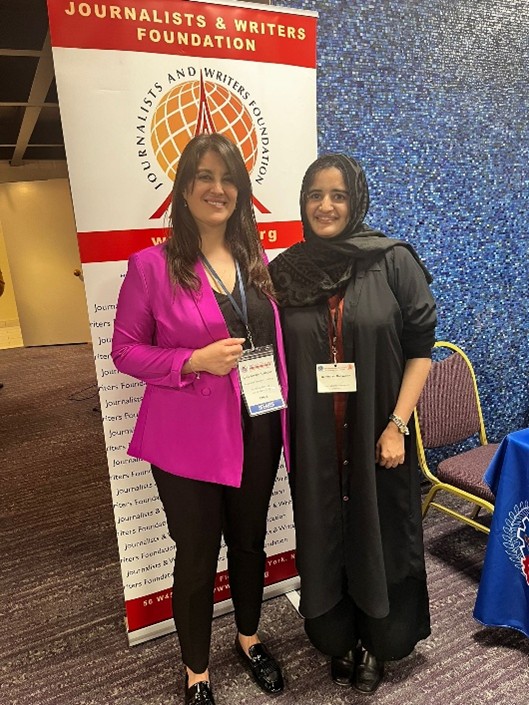
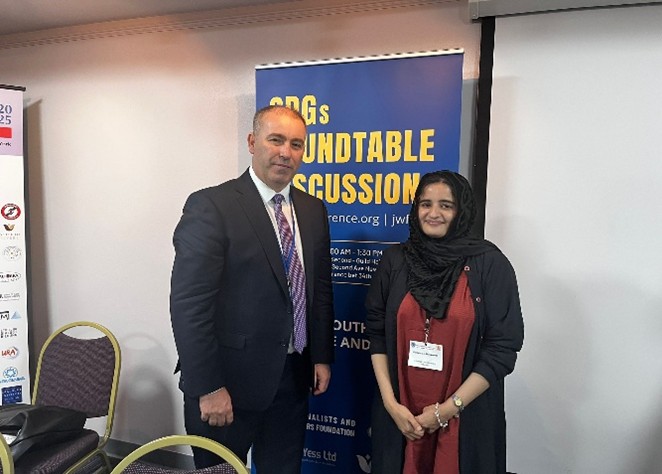
This roundtable discussion was held on 23 September 2025 in New York. It was organized by the Journalist and Writer Foundation and consisted of two rounds.

Round One: The Role of Interfaith Dialogue for Sustainable Peace and Development

Attending the first round was a deeply enriching experience that expanded my understanding of how diverse religious and cultural communities can collaborate to address global challenges. One key insight I gained was that interfaith dialogue is not merely about theological discussions; it is about building relationships of trust and empathy across differences.

Speakers emphasized that dialogue must move beyond words and become a platform for concrete action, whether through joint humanitarian initiatives, educational programs, or community development projects. This reinforced for me the idea that sustainable peace cannot be achieved in isolation; it requires inclusive participation from all sectors of society, including faith communities.

Another powerful takeaway was the recognition of shared values across religions: compassion, justice, stewardship of the earth, and the dignity of human life. These common principles can serve as a unifying foundation for collaboration on Sustainable Development Goals, such as poverty alleviation, environmental protection, and conflict prevention. Interfaith dialogue is an essential tool for achieving sustainable peace and development. It fosters mutual understanding, counters extremism, and mobilizes collective action toward shared human goals.

Round Two: Global Youth Voices for Peace and Justice

The second round was about global youth voices for peace and justice. Throughout the event, I was inspired by the diversity of voices and experiences shared. From climate activism to social justice, education access, and the fight against systemic inequality, each speaker brought unique perspectives rooted in lived realities.

I also appreciated the space given to discuss the challenges we face, such as burnout, lack of funding, and limited representation, but more importantly, the solutions we can create.

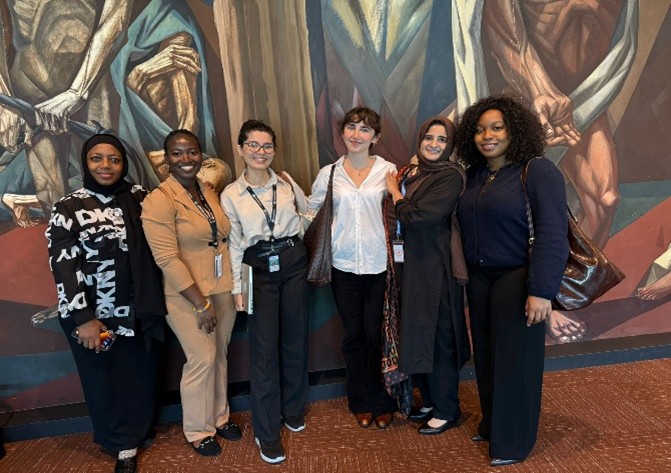
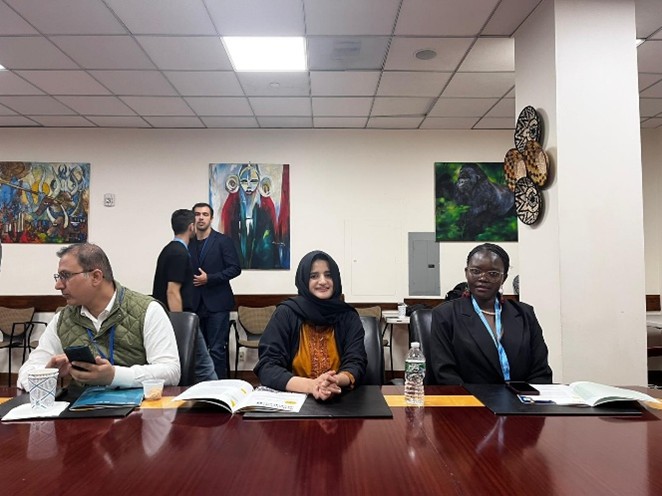
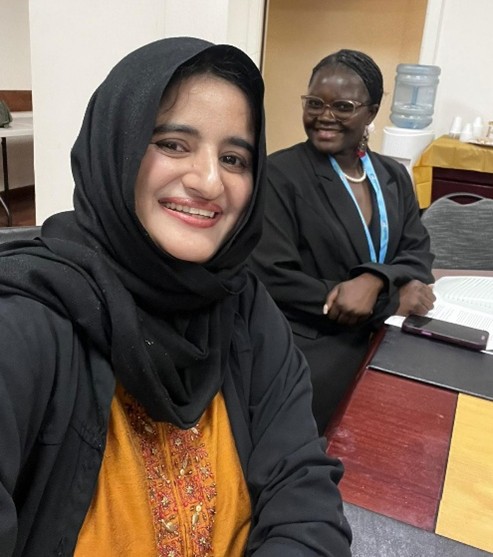
The roundtable discussion with the COP29 Presidency Youth Climate Champion and other experts was held at Uganda House, New York, on 26 September 2025, on the margins of UNGA80. It was a one-hour discussion. Young women from different countries participated in this discussion.

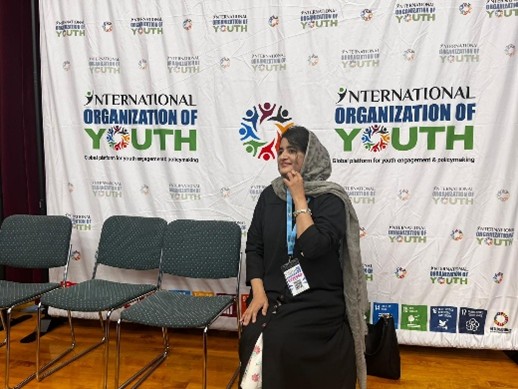
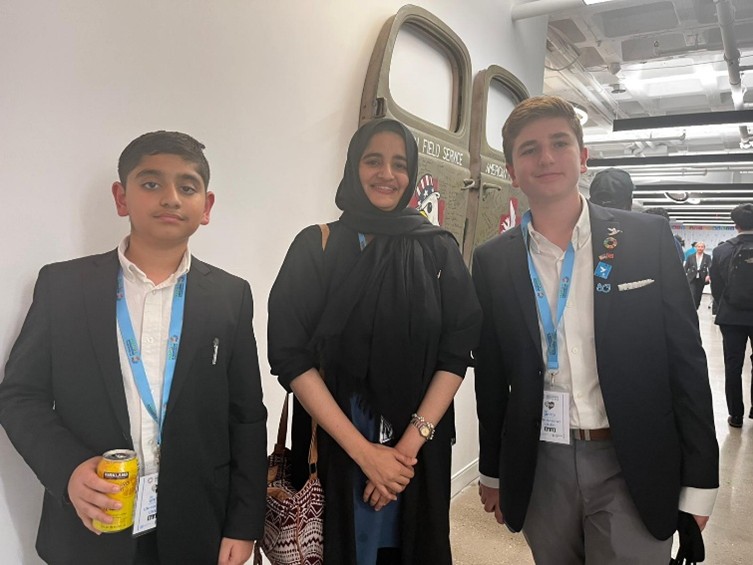
The 12th edition of the International Youth Conference was held in New York, USA, from 24 to 27 September 2025. This conference brought together youth from across the globe. It included workshops, sessions, and outdoor activities.

The conference gave all delegates the chance to engage, participate, and build mutual understanding. It focused on learning diplomacy, networking, and diversity.

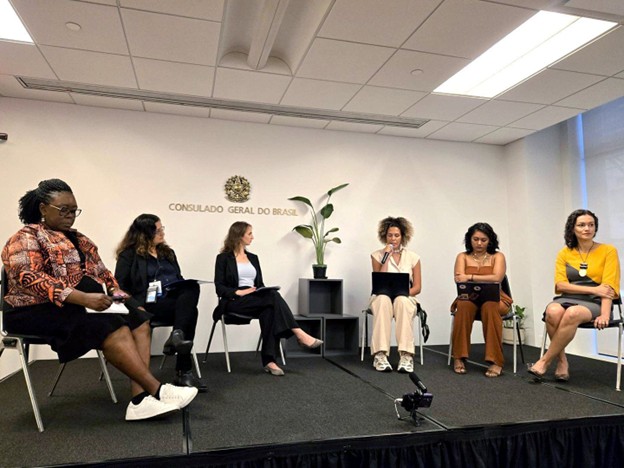
This event was held at the Consulate General of Brazil by Geledés – Black Women Institute and the People of African Descent Stakeholder Group (PAD SG).

The discussion highlighted a key reality: despite decades of global advocacy for gender equality, structural racism and historical injustices still limit the full realization of human rights for African descent girls and young women.

A major insight from the meeting is that representation alone is not enough; we must also focus on influence. It is not just about being present at the table, but about shaping the agenda, setting priorities, and holding systems accountable. The need for disaggregated data, intersectional policymaking, and meaningful investment in education, healthcare, and leadership development was emphasized repeatedly.

This meeting reminded us that achieving gender equality and protecting the rights of African descent girls and young women is not a side issue—it is central to global peace, justice, and sustainable development.

/* Password toggle wrapper */ .password-toggle { position: absolute; right: 12px; top: 50%; transform: translateY(-50%); cursor: pointer; font-size: 18px; opacity: 0.6; } .password-toggle:hover { opacity: 1; } /* Ensure input has room for icon */ .elementor-field-type-password input { padding-right: 40px !important; }