The Suffragists’ Great-Great-Granddaughters Claim Their Place
At our Board Meeting, we adopted job descriptions for our office holders, heard from members who keep working through epidemics and disasters – and met the young activists behind our new youth division.
Photo: Mary Taylor / Pexels
A new generation finds its cause
In 1904, the women who founded the International Alliance of Women (IAW) fought for the right to vote. This year, their great-great-granddaughters are taking up a cause of their own: women's health. At our Board Meeting on 14 November, held online, students and young activists presented the forming of our new youth division. Its official name is Next Generation.
The division grew out of a Board discussion about bringing younger women into a leadership role in our alliance. Antonia Lavine, our secretary general, worked with a group of students to set it up, among them Alexandra Pereza, a second-year student at New York University, and Jolina Hamdan, a recent graduate in political science and communication studies from Chapman University. Both have interned with Antonia, are now IAW members and co-chair Next Generation. Alexandra presented the division to the Board. About ten young members have joined so far, with a secretary and a social media manager; the goal is around fifty.
Each year, the group will choose one priority issue. For women's health in 2027, the list from its first brainstorming session was strikingly concrete: “abortion, access to menstrual products, period education, and access to safe toilets,” Alexandra said. Applicants fill in a form that asks less about their CV than about their reasons.
“We really want people that are not just qualified but have a strong passion or strong connection to an issue that's happening in the world.”Alexandra Pereza
For now, Next Generation is open to young people aged 15 to 25. The division plans a virtual panel presentation during the 71st session of the UN Commission on the Status of Women in March, and it is asking us all for one important favor: introductions to youth organizations in our countries.
“The world is one”
Water and Pads, a project we run with ten IAW membership organizations, has had a hard year. Ursula Nakamura from Switzerland, who coordinates the project together with Heidi Bodmer, told the Board about SOFEDEC, our member in the Democratic Republic of the Congo, which keeps working in conflict areas despite an Ebola outbreak. “We sometimes warn Anuarite Siirewabo, its coordinator, and say: please stay in Kinshasa, where it's safer,” Ursula said. SOFEDEC has just added a new school, in a poor district of the capital. In Nepal, Goma Bastola, president of RUWON, another of our member organizations, traveled on roads that barely existed to help survivors of the recent disasters.
“We feel the world is one, and IAW is one.”Ursula Nakamura, Water and Pads
The work shows results: schools ask the teams to come back, and fewer students face unwanted pregnancies. In Cameroon, a pilot project is testing the local production of reusable pads. A generous donation from our Swiss affiliate, the Swiss Association for Women's Rights (adf-svf), secures part of the funding until the end of 2027. Beyond that, like many organizations around it, Water and Pads depends on fundraising that has become harder.
Waiting for UNESCO
A second water project was on hold at the time of our meeting. Together with several other non-governmental organizations, we are part of an initiative with UNESCO, the United Nations Educational, Scientific and Cultural Organization, to train about 25 people from six African countries as hydrology technicians at an institute in Burkina Faso. In Mauritania, we worked with two local organizations to find four candidates and applied for funding for their training and travel. Our paperwork had been complete since August.
UNESCO had yet to decide on funding for any of the six countries, although in earlier rounds decisions came by early September. So the training, planned for early 2027, was unlikely to start before spring, said Kerstin Löffler, our main representative to UNESCO. The Board also discussed the possibility of involving our members in the project if there is a further round, ideally in connection with Water and Pads.
Talks from many countries, starting with cyber violence
The Commission on Violence against Women, convened by Antonia Lavine, has started a series of online talks in which members present the situation in their own countries. The first session, organized by Iliana Balabanova, our vice president, looked at cyber violence and at a European project that tackles it. It drew participants from several countries.
“Online abuse is real-world violence.”Iliana Balabanova, vice president
“It can extend abuse, silence women in public life and deprive women and girls of privacy, dignity and freedom,” Iliana said. “We need prevention, protection and accountability. Women's rights, safety and dignity must be protected online as well as offline.”
The next session, early in 2027, will look at data protection and digital security, because without them women are left exposed to intrusion and abuse online. Members who want to present their country, or suggest a topic or speaker, can contact Antonia Lavine or Iliana Balabanova.
Pink rickshaws and a webinar on gendercide
Lajja Shah, our assistant secretary general and convener of our Commission on Financial and Economic Policies, reported on an initiative in India that shows what economic empowerment can look like. At the Statue of Unity in Ekta Nagar, Gujarat, a major tourist site, more than 200 women from tribal communities have been trained, licensed and employed to drive about 300 pink electric autos, in a trade long dominated by men. They earn about 15,000 to 20,000 Indian rupees a month, roughly 160 to 215 US dollars. For many it is their first own income, Lajja Shah said, and it changes their place at home: they pay toward household costs and their children's schooling, and have a say in family decisions about money.
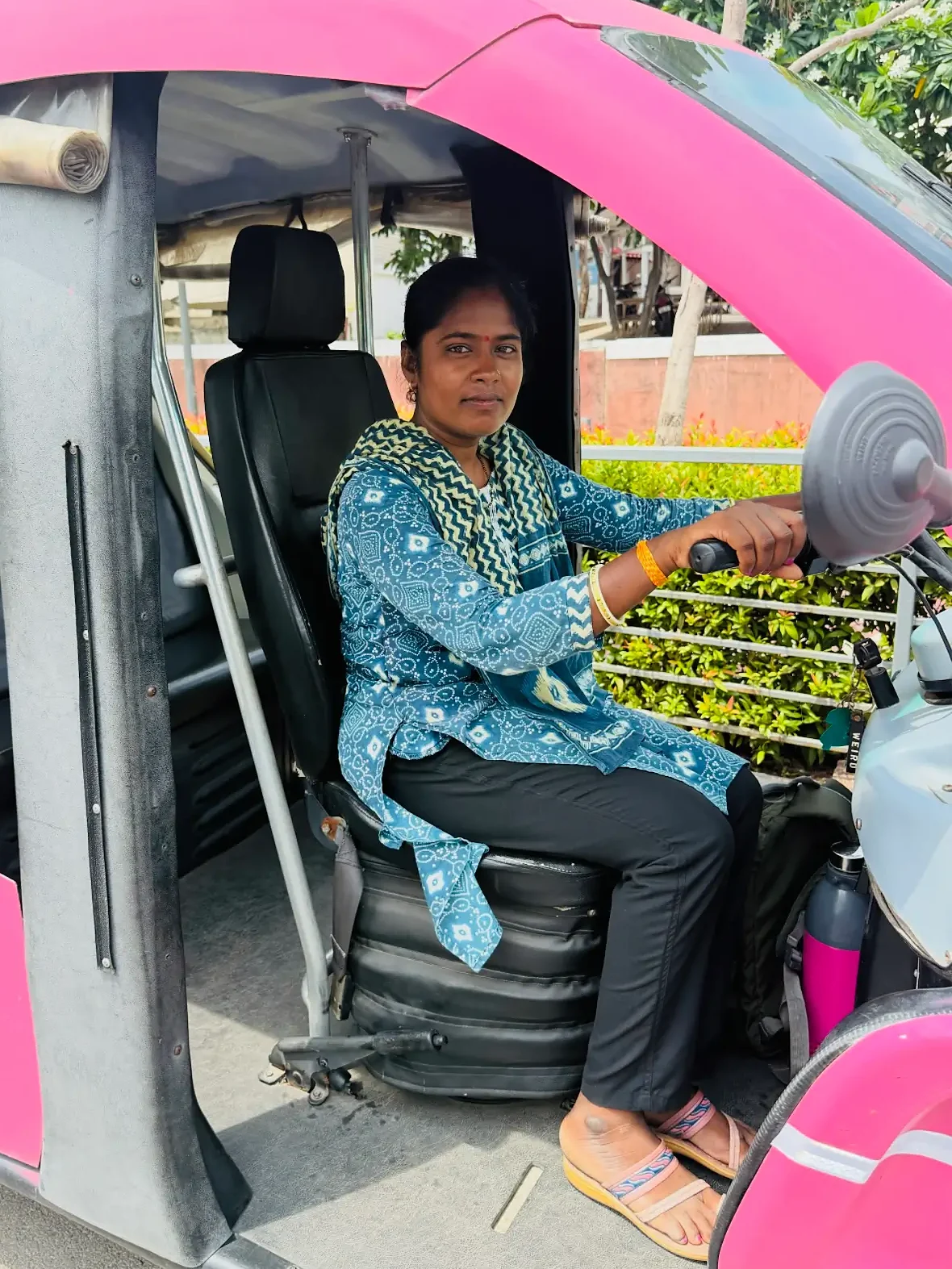
Marion Böker, who coordinates our commissions on democracy, human rights and peace, pointed to two threats. One is gendercide, the killing of women and girls because they are female. The commissions want the UN Security Council to recognize femicide as a weapon of war, and in January they will hold a webinar on the subject with a guest from a US organization that works on it. The other threat is money: in many countries, public funding for women's organizations is being cut, a worry heard more than once during the meeting. The commissions call for gender budgeting, which means examining public budgets for how they affect women and men differently.
Finally in writing: who does what
What exactly does a vice president do? Or a treasurer? Until this meeting, our Board had never adopted written answers. Now it has. A task force chaired by Simge Simsek spent more than a year drafting job descriptions for our offices, went back to the office holders for comments several times, and won the Board's unanimous approval. That matters in an alliance run almost entirely by volunteers: anyone taking on a role can now see from the start what it involves, find their feet more quickly and hand over more smoothly when the time comes.
Twenty delegates for New York
Every March, government delegations and delegates of civil society from around the world gather at UN headquarters in New York for the Commission on the Status of Women (CSW), the main UN body on gender equality. From 8 to 19 March 2027, its priority theme will be gender equality and the empowerment of all women and girls in the context of the 2030 Agenda for Sustainable Development; it will also review progress on climate change and disaster risk reduction.
Interest within our alliance outstripped our accreditations: 33 members applied for 20, said Sibylle von Heydebrand, our vice president, who has led our CSW task force for several years. Twelve of the selected delegates have never attended before, among them several young members. In two intensive preparatory meetings over the summer, the delegation drafted our written statement, and ten national and international organizations co-signed it. In New York, several delegates will stay in the same hotel, so they can work together in person between sessions.
About us · Founded in 1904, the International Alliance of Women (IAW) brings together about 45 member organizations worldwide. We hold general consultative status with the United Nations Economic and Social Council (ECOSOC), the highest level of accreditation for non-governmental organizations.